
Loading...
Serving Lafayette, IN and surrounding areas. (765) 742-7807
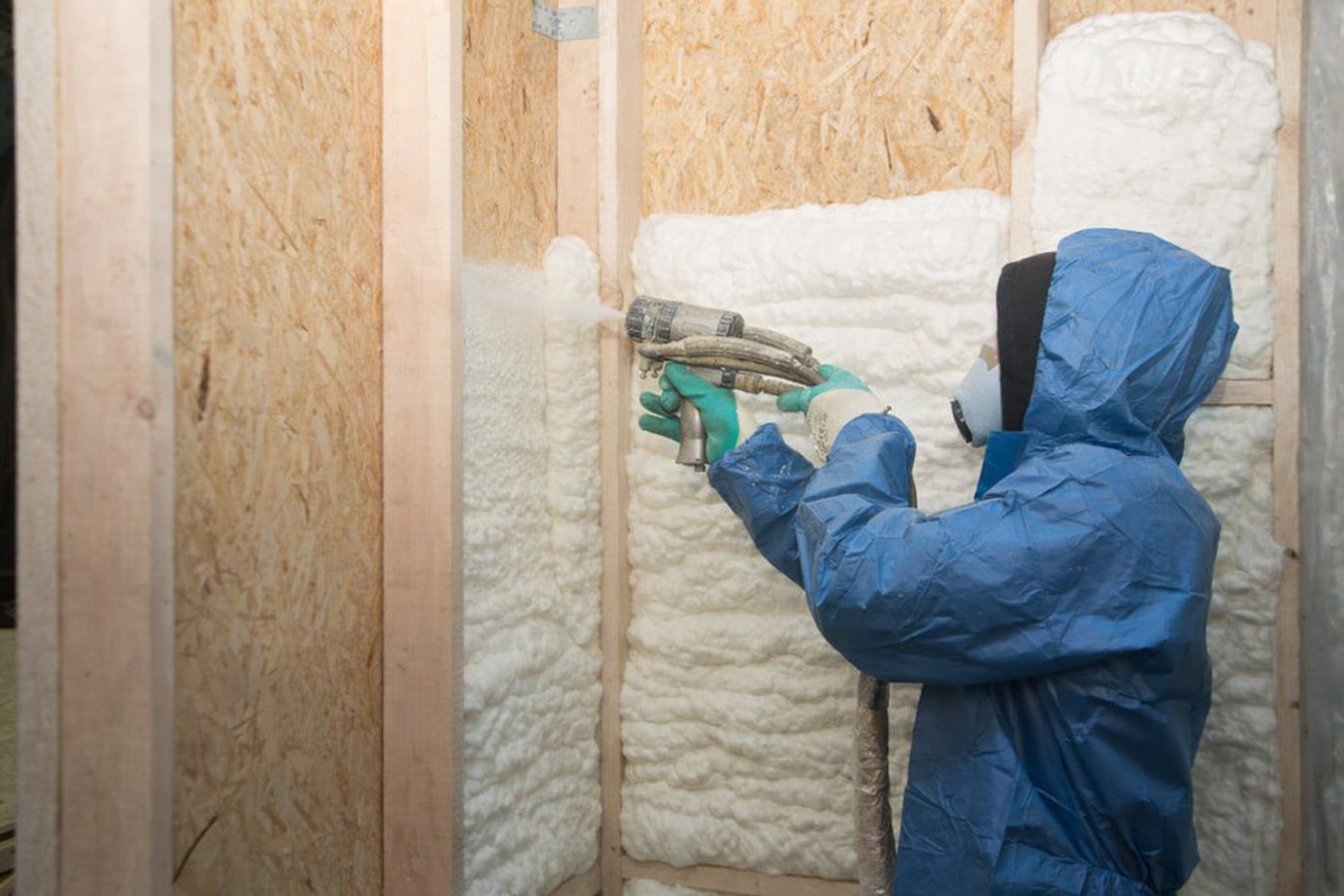
Lafayette Insulation provides spray foam, attic, and crawl space insulation to Carmel, IN homeowners throughout Hamilton County. We have been serving central Indiana since 2023, know the region's older homes, and reply to every estimate request within 1 business day.
Carmel homes built in the 1990s and 2000s often have uninsulated or under-insulated rim joists where the floor framing meets the foundation wall - one of the most common causes of cold first-floor rooms that homeowners in subdivisions across Hamilton County report every winter. Closed-cell spray foam is the most effective fix for this specific problem because it insulates and seals moisture in one application. For the full picture of what is involved, learn more about spray foam insulation.
Carmel grew fast through the 1990s and 2000s, and many of the production-built homes from that era used builder-grade insulation that has now been compressing for 20 to 30 years. Hamilton County sits in Climate Zone 5, where the Department of Energy recommends R-49 to R-60 in the attic - a level most Carmel homes from that building wave no longer reach. The older homes near the Arts and Design District face a different version of the same problem: original insulation that was minimal to begin with and has been settling for decades.
Hamilton County's clay soil expands when it absorbs water and holds moisture against crawl space walls and foundation framing long after a rain. Carmel homes near the city's many creeks and retention ponds are especially exposed to this moisture pressure in spring. Insulating the crawl space and pairing that work with a vapor barrier stops the pathway that turns ground moisture into cold floors and wood rot in the floor system above.
Many Carmel subdivision homes from the 1990s and 2000s were built with a high volume of recessed lights and HVAC penetrations through the attic floor - each one a gap that lets conditioned air bypass the insulation entirely. Sealing those gaps before adding insulation is what separates a job that makes a noticeable difference from one that leaves homeowners wondering why their bills barely moved.
Carmel homes with finished or partially finished basements often have uninsulated walls that allow cold from the surrounding soil to conduct directly into the living space. Hamilton County's clay-heavy soil stays cold well into spring, which means basement walls act as a heat sink from November through April. Insulating those walls - along with the rim joist at the top of the foundation - makes basements more comfortable and reduces the load on the home's heating system.
Carmel has grown from roughly 25,000 people in 1990 to more than 100,000 today, making it one of the fastest-growing cities in Indiana. The bulk of that growth came in subdivisions built during the 1990s and 2000s - large single-family homes, often in the 2,500 to 4,500 square foot range, with brick veneer fronts, vinyl siding on the sides, and the builder-grade insulation that was standard practice at the time. Those homes are now 20 to 35 years old and hitting the age where original insulation has compressed and settled below an effective level. Hamilton County sits in Climate Zone 5, where the Department of Energy recommends attic insulation at R-49 to R-60 - a target most Carmel homes from that era fall short of today. Winters in Carmel average around 23 inches of snow, with temperatures that regularly drop below 20 degrees Fahrenheit and a freeze-thaw cycle that stresses everything from driveways to foundation walls.
The older neighborhoods near the Carmel Arts and Design District present a different set of conditions. Homes built in the 1960s through 1980s in those blocks have original insulation - where any was installed at all - that has been settling for 40 to 60 years. These properties often have little or no wall insulation, irregular attic geometries, and foundations that sit on the same clay-heavy soil found throughout Hamilton County. Clay soil expands when saturated and shrinks when dry, putting ongoing pressure on crawl space walls and basement foundations through every rain cycle. Carmel also sees heavy spring rains, and neighborhoods near the city's many retention ponds and creek corridors can experience ground saturation that drives moisture into crawl spaces and basements long after the rain has stopped.
Our crew has worked in Carmel since Lafayette Insulation started serving Hamilton County in 2023, and the range of homes we encounter here is wider than in most Indiana cities. A 4,000-square-foot production-built home in West Clay with a full basement and three car garage needs a different insulation plan than a 1,400-square-foot ranch from 1972 near the old downtown core - and we handle both. For permit coordination, we work with the City of Carmel Department of Community Services when the project scope requires a permit, and we handle that before work is scheduled.
US-31 and Keystone Parkway are the main corridors we use to reach Carmel from Lafayette. They give us consistent access across the city - from the neighborhoods near the Palladium in Midtown to the larger-lot subdivisions like Bridgewater and Jordan Woods further east and north. Carmel is well-known for having more roundabouts than any other city in the United States, and navigating them is second nature for a crew that has made this drive regularly for two years.
We serve homeowners east toward Fishers, IN and north toward Noblesville, IN, so if you have neighbors or family in those communities, the same crew and the same process applies.
Reach out by phone or through the contact form and we will reply within 1 business day. We will ask about your home's age, size, and what prompted you to call - so the estimator arrives with the right context for a Carmel property rather than a generic checklist.
We visit your home, check the attic depth and air sealing needs, inspect the crawl space or rim joist if relevant, and note any moisture indicators. The visit is free and takes 30 to 45 minutes. You receive a written estimate with a fixed total price before any work is agreed upon - no surprises after the job starts.
Most attic and spray foam jobs in a standard Carmel home are finished in a single day. If spray foam is part of the scope, you will need to be out of the home for 24 hours after application while the foam cures - we confirm that window with you before the job is scheduled.
Before we leave, we walk you through the finished work and provide written documentation of the insulation type, area covered, and resulting R-value. Keep that record - you will need it for any federal tax credit or Indiana utility rebate claim you plan to file.
We serve all of Carmel and Hamilton County. Free on-site estimate, written price before any work begins, and a reply within 1 business day.
(765) 742-7807Carmel, Indiana sits in the southern half of Hamilton County, directly north of Indianapolis on US-31, and has grown from a small suburb into one of the largest and wealthiest cities in the state over the past three decades. The city is well-known for having more roundabouts than any other city in the United States - over 140 - and for the Palladium, the centerpiece of the Center for the Performing Arts that anchors the Midtown area. Most of Carmel's housing stock consists of large single-family homes in planned subdivisions, many with attached garages, homeowners associations, and brick veneer fronts - the product of sustained suburban growth from 1990 onward. Homeownership in Carmel runs around 70 percent, so most residents here have a long-term stake in keeping their properties in good condition.
The older neighborhoods near the Arts and Design District tell a different story. In those blocks, homes from the 1960s, 1970s, and early 1980s sit on smaller, tree-lined lots close to the original downtown core - properties with original construction that often predates modern insulation standards entirely. The contrast between those older homes and the large 2000s builds out in West Clay or Bridgewater is significant, and each needs a different approach to reach a comfortable and efficient baseline. We also serve nearby communities including Fishers, IN to the east and Noblesville, IN to the north.
Spray foam creates an airtight seal that dramatically reduces energy loss in walls, attics, and crawl spaces.
Learn moreProper attic insulation keeps conditioned air inside your home and lowers heating and cooling bills year-round.
Learn moreBlown-in insulation fills irregular cavities evenly, providing consistent thermal performance with minimal disruption.
Learn moreWhole-home insulation solutions tailored to your specific house type, age, and energy goals.
Learn moreSafe, complete removal of old or damaged insulation before new material is installed.
Learn moreInsulating the crawl space improves comfort, controls moisture, and protects floors from temperature extremes.
Learn moreWall insulation reduces outdoor noise and maintains consistent indoor temperatures throughout every season.
Learn moreAir sealing closes gaps and cracks that let conditioned air escape and outside air infiltrate your home.
Learn moreBasement insulation prevents heat loss through foundation walls and helps eliminate cold floors above.
Learn moreClosed-cell spray foam offers the highest R-value per inch and acts as both insulation and vapor barrier.
Learn moreOpen-cell foam expands to fill complex cavities, delivering excellent soundproofing and thermal performance.
Learn moreSealing the attic floor stops conditioned air from rising out of the living space into unconditioned areas.
Learn moreA heavy-duty vapor barrier blocks ground moisture from entering your crawl space and causing structural damage.
Learn moreProfessional vapor barrier installation protects your home from moisture intrusion and mold growth.
Learn moreRetrofit insulation upgrades existing homes without major reconstruction, improving efficiency quickly.
Learn moreCommercial-grade insulation systems for warehouses, offices, and industrial facilities of any size.
Learn moreCall us or submit an estimate request today. We serve all of Carmel and Hamilton County, and every job comes with a written price before we start.