Loading...
Serving Lafayette, IN and surrounding areas. (765) 742-7807
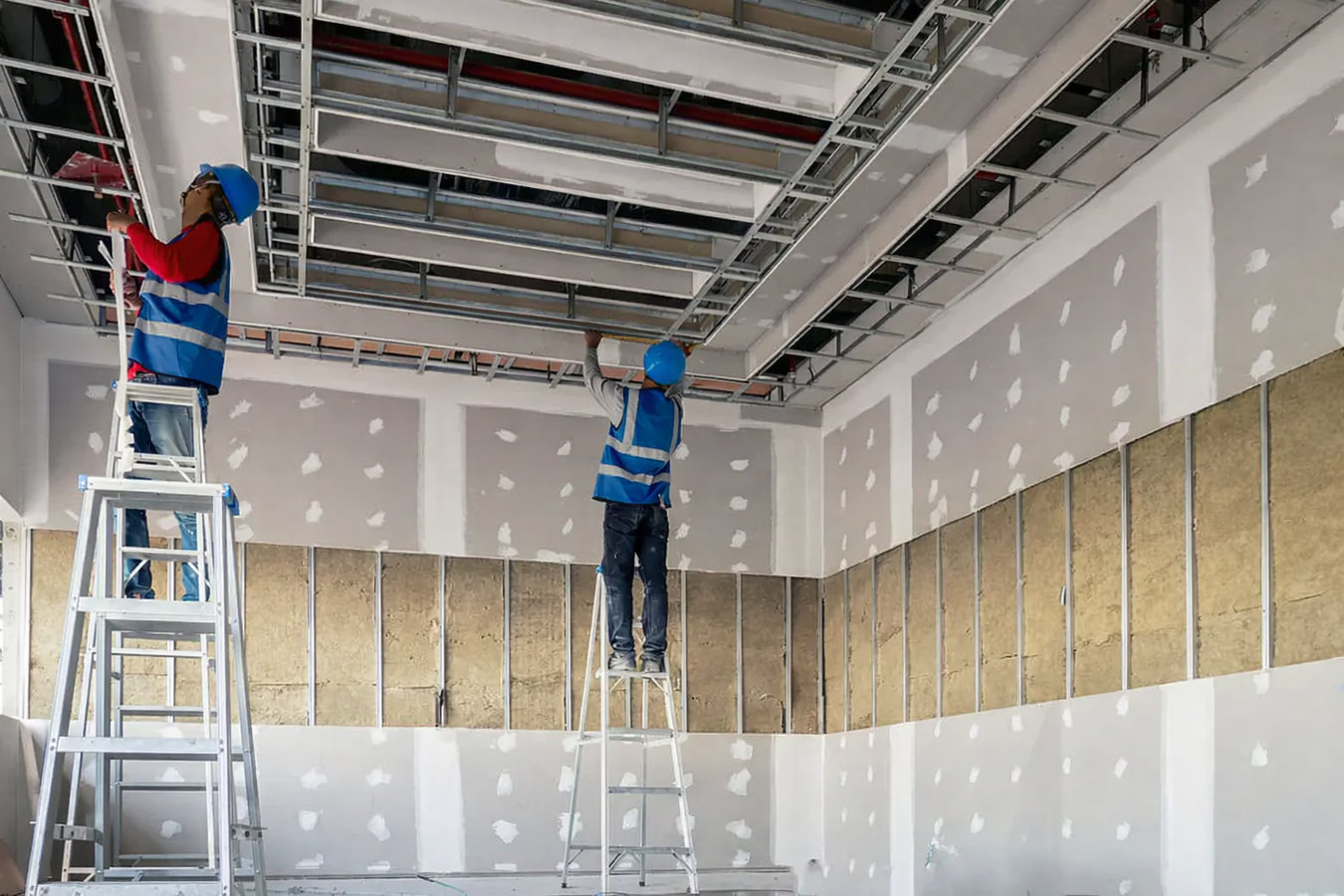
An under-insulated commercial building costs more to heat every January and never stays comfortable. Proper insulation fixes both problems - without closing your doors for weeks.
Commercial insulation in Lafayette, IN slows heat movement through a building's walls, roof, and floors - reducing utility costs, evening out temperatures, and protecting older structures from moisture damage - with most jobs completed in one to three days around your schedule.
Heat does not care that your building is a business. It moves through every uninsulated surface the same way it does through a home - and in a Lafayette winter, that movement is constant from November through March. A warehouse with an uninsulated roof deck, a retail space with cold exterior walls, an office where certain rooms are always uncomfortable despite a working HVAC system - these are not quirks of the building. They are the predictable result of insulation that was never installed, or installed to a standard that was minimal even when the building was new. Commercial insulation is how you close that gap, and in most cases the disruption to your operations is much smaller than building owners expect.
For commercial buildings where spray foam is the right fit - particularly roof decks and irregular cavities - our spray foam insulation service handles those applications directly. Where maximum insulation value per inch is the priority, we also offer closed-cell foam insulation suited for wall assemblies and roof systems where thickness is limited.
Lafayette winters are genuinely cold - average January highs around 32 degrees with overnight lows regularly dropping into the teens. If your heating costs jump sharply during those months compared to similar buildings nearby, under-insulation is one of the first things worth investigating. A well-insulated building holds warmth noticeably better, and the difference shows up clearly on the utility statement.
If one corner of your warehouse, one side of your office, or the area near exterior walls feels significantly colder than the rest of the space, that unevenness points to insulation gaps. Consistent temperature throughout a building is one of the clearest signs the work was done right - uneven temperatures are one of the clearest signs it was not, or was never done at all.
Given Lafayette's spring rain patterns and ice dam conditions on older roofs in winter, roof leaks are not uncommon in commercial buildings here. Water that reaches ceiling or wall cavities can saturate insulation and cause it to lose most of its effectiveness - even if the surface looks fine. Wet insulation can also grow mold, which becomes a much bigger and more expensive problem than a straightforward replacement.
A large share of Lafayette's commercial buildings were constructed before modern energy standards existed. If your building has never had its insulation assessed or upgraded, there is a reasonable chance it is performing well below what is achievable today. An inspection costs very little and can quickly tell you whether an upgrade would pay for itself in energy savings - often within a few heating seasons.
Every commercial insulation project starts with an on-site walkthrough - not an estimate by phone. Commercial buildings vary too much in size, age, construction type, and current condition to quote accurately without seeing the space. We look at the existing insulation, check for moisture or damage, and identify which areas of the building are losing the most energy. We may use thermal imaging to find hidden problem areas that a visual inspection would miss. This assessment is typically free and usually takes one to two hours. After the walkthrough, you receive a written proposal that outlines exactly what work will be done, what materials will be used, the total cost, and a realistic timeline. For building owners who also need spray foam insulation for roof decks or complex cavities, we coordinate that work as part of the same project rather than treating it as a separate engagement.
For buildings where insulation value per inch is the priority - tight wall assemblies, metal building panels, roof systems with limited depth - we offer closed-cell foam insulation as a high-performance option. Closed-cell foam also adds structural rigidity and moisture resistance, which matters in older Lafayette commercial buildings that have seen decades of weather pressure on exterior surfaces.
Best for large open spaces with high ceilings and exposed roof decks - spray foam or blown-in insulation applied to the roof structure where heat loss is highest and the payback on utility savings is fastest.
Suited for commercial spaces where customer and staff comfort matters - wall cavity insulation and ceiling work that evens out temperature differences across the building without disrupting daily operations.
For buildings where a roof leak or water intrusion has compromised existing insulation - old material is removed, moisture issues are addressed, and new insulation goes in to current performance standards.
For buildings that combine commercial and residential use, or have multiple tenant spaces - insulation work is planned around occupancy schedules to minimize disruption to tenants and business operations.
Lafayette sits in a climate zone where commercial buildings face five to six months of genuine heating demand every year. January average highs are around 32 degrees, and lows regularly drop into the teens - sustained cold that puts real pressure on any building envelope that is not performing well. Lafayette also has a significant share of older commercial and light industrial buildings, many of them constructed in the mid-20th century when energy efficiency was not a design priority. Buildings from that era were often insulated with materials that have since settled, degraded, or been identified as problematic. If your building is more than 40 years old and has never had an insulation assessment, there is a good chance the current performance is well below what your utility bills are telling you it should be. Business owners in West Lafayette near the Purdue University corridor operate in a competitive and varied commercial building market where contractors here are experienced with a wide range of building types and project sizes.
Moisture is also a year-round concern for commercial buildings in this part of Indiana. Lafayette sits along the Wabash River, and the surrounding low-lying areas experience elevated humidity, particularly in spring and early summer. For commercial buildings, that means moisture control is not just a winter problem - it is something that affects insulation performance across all seasons. A contractor who understands local humidity patterns will recommend materials and installation approaches that account for both the dry cold of January and the damp warmth of May. We serve commercial property owners across the region, including those in Kokomo and the broader central Indiana area where similar older commercial stock faces the same combination of cold winters and seasonal moisture pressure.
When you call or send a message, we ask a few basic questions - the size and age of your building, what type of space it is, and what problem you are trying to solve. We follow up within one business day to schedule an on-site walkthrough. Most reputable contractors will not quote a commercial job accurately without seeing the building in person first.
During the walkthrough, we look at your existing insulation, check for moisture or damage, and identify which areas are losing the most energy. We may use a thermal camera to find hidden problem spots. This visit is usually free and typically takes one to two hours. We will not recommend a scope of work without seeing what we are working with.
After the assessment, you receive a written proposal that outlines what work will be done, what materials will be used, the total cost, and an estimated timeline. Take time to read it carefully and ask questions - a good contractor welcomes that. This is also when to ask about permits, which we pull and manage on your behalf.
The crew sets up, protects your space, and completes the installation - most commercial jobs finish in one to three days. After completion, a city inspector visits to verify the work meets Indiana's current energy standards. We coordinate that inspection scheduling. Once it passes, the job is officially closed and documented.
Free on-site walkthrough. Written quote before any work begins. No obligation.
(765) 742-7807We do not quote commercial insulation by phone or by guessing at square footage. A contractor visits your building first, looks at what is actually there, and builds the estimate from that. It takes more time upfront, but it means the scope covers what your building actually needs and the number you receive is accurate - not a ballpark that shifts when the crew shows up.
We serve commercial property owners across all 12 service areas in central Indiana, from Lafayette and West Lafayette to Kokomo, Crawfordsville, and beyond. That coverage means we understand how older commercial stock in this region performs and what it takes to bring it up to a standard that actually shows up in lower utility costs.
Most commercial insulation projects in Lafayette require a permit from the City of Lafayette Building Department, and we handle the application and inspector scheduling on your behalf. A permitted and inspected job means the work is documented and verified - which matters if you ever sell or refinance the property, and which protects you if questions arise later.
Building Performance Institute-trained contractors understand how insulation, air sealing, and ventilation interact as a system - not just as individual layers. Working with a crew that documents each stage of the job means you have a clear record if questions arise later. We take that accountability seriously on every commercial job.
Every commercial insulation job we complete in Lafayette is approached the same way: look at the building honestly, quote it accurately, and do the work to a standard that holds up through Indiana winters. That consistency is what keeps building owners calling us back when the next project comes up.
For independent guidance on commercial building insulation, the U.S. Department of Energy commercial buildings resource and the Building Performance Institute are reliable starting points. The Insulation Contractors Association of America can help you understand what to look for when evaluating contractors for a commercial project.
Spray foam is the most common choice for commercial roofs and irregular cavities - it insulates and air-seals in a single step, making it highly effective in Lafayette's cold winters.
Learn moreClosed-cell foam provides the highest insulation value per inch and adds structural rigidity - well suited for commercial wall assemblies and roofs where thickness is limited.
Learn moreLafayette winters do not wait - call today to schedule your free on-site walkthrough before the cold season fills our calendar.