Loading...
Serving Lafayette, IN and surrounding areas. (765) 742-7807
If your home has drafts you cannot find and heating bills that do not make sense, hidden air leaks are usually the reason. We locate and seal every gap so your home holds heat the way it should.
Air sealing services in Lafayette, IN means finding and closing the small gaps, cracks, and openings in your home where outside air sneaks in and conditioned air leaks out - most jobs on a single-family home are completed in one to two days with a before-and-after blower door test to confirm the improvement.
Most of the air leaking out of a typical home escapes through the attic floor, around plumbing and wiring penetrations, and through gaps in the basement - not through windows and doors as many homeowners assume. The U.S. Department of Energy estimates that air leaks account for a significant share of the energy used for heating and cooling in a typical home. That means a lot of the money you spend on your gas or electric bill is literally going out through cracks you cannot see. If you have already added or plan to add basement insulation, pairing it with air sealing at the same time produces the most complete result.
For homes where the attic is the primary source of heat loss, attic air sealing addresses the single biggest leakage point in most Lafayette homes and is often the highest-return project you can do.
Lafayette winters are long and cold, and if your gas or electric bill climbs dramatically during the coldest months, air leakage is often a major reason why. Your heating system is working overtime to replace the warm air that is constantly escaping through gaps you cannot see. If your bills feel out of proportion to the size of your home, it is worth having a contractor test how much air your house is actually losing.
If one bedroom, a corner of the living room, or the area near an exterior wall always feels drafty or cold no matter how high you set the thermostat, that is a classic sign of air leakage nearby. In older Lafayette homes, this often happens near the rim joists in the basement, around window and door frames, or along the top-floor ceiling where the attic floor meets the walls.
Hold your hand near an outlet or light switch on an exterior wall on a cold day. If you feel cool air coming through, that outlet is connected to a gap in the wall cavity that runs all the way to the outside. This is extremely common in homes built before the 1980s, which make up a significant portion of Lafayette's housing stock, and it is one of the easiest things for a contractor to fix.
When outside air is being pulled into your home through gaps in the attic or basement, it brings whatever is in that air with it - dust, pollen, mold spores, and outdoor odors. If you find yourself dusting more than seems reasonable, or notice musty smells you cannot trace to a specific source, air leakage from unconditioned spaces may be the cause.
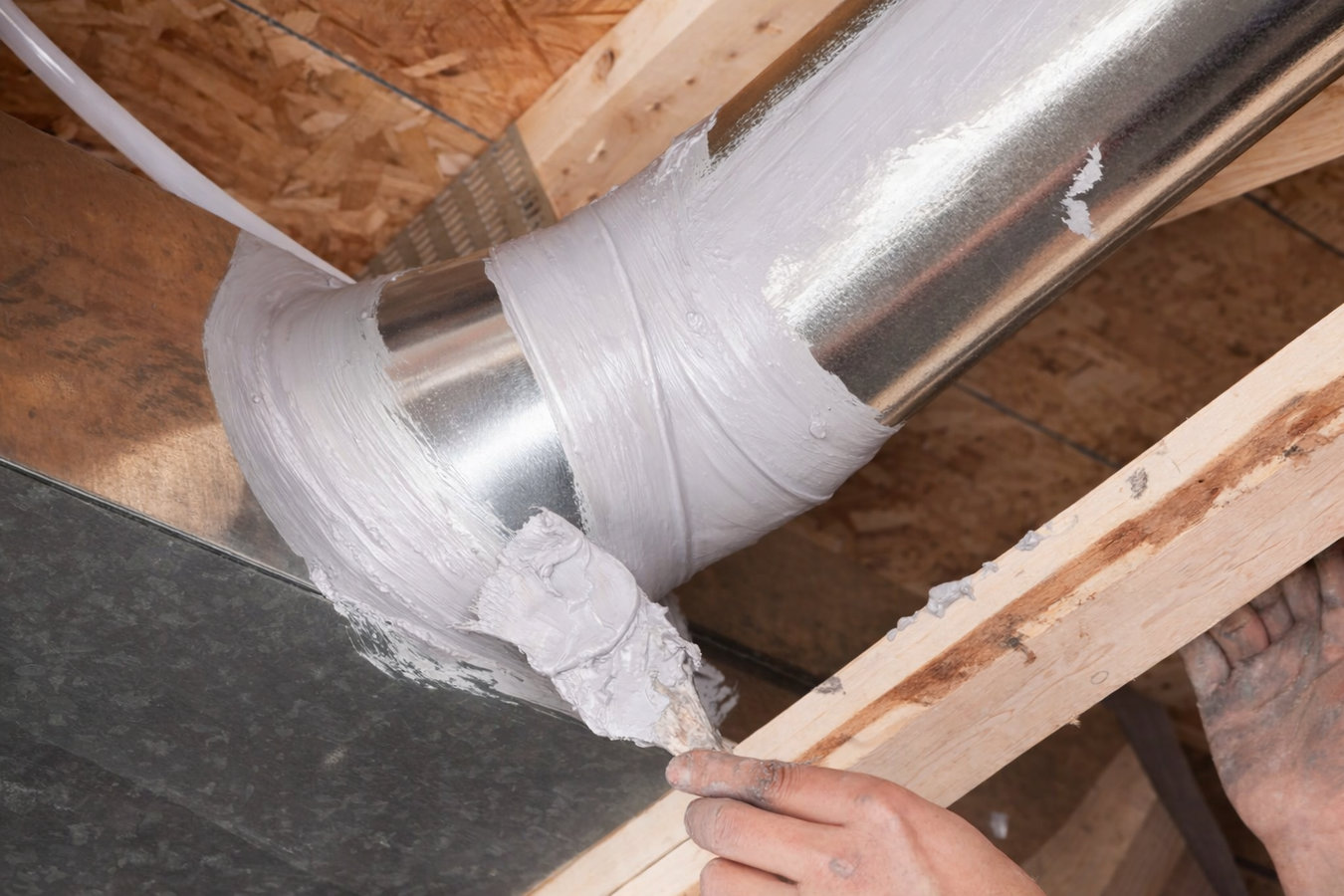
Every air sealing job starts with a blower door test - a large fan mounted in your front door that depressurizes the house and makes air leaks much easier to locate. We use this measurement at the start and again at the end so you can see exactly how much improvement was made. We also use a thermal imaging camera on many jobs, which shows cold and warm spots on walls and ceilings that reveal where air is moving. Small cracks get caulk or weatherstripping; larger gaps around pipes, wires, and framing get filled with spray foam. For homes where the basement rim joist is a primary source of leakage, combining this work with basement insulation addresses both problems in a single visit.
The attic floor is the most common high-leakage area in a Lafayette home, and attic air sealing is often the single highest-return project available. We work through attic insulation systematically to seal around light fixtures, ceiling penetrations, and the top plates of walls below - all spots that were never addressed when the home was built. After sealing, we assess ventilation to confirm that the home still has adequate fresh air exchange, because a properly sealed home needs controlled ventilation to stay healthy.
The diagnostic foundation of every air sealing job - measures exactly how much air your home is losing and confirms the improvement when the work is done.
Targets the highest-leakage area in most homes - ceiling penetrations, top plates, and light fixtures are the biggest sources of heat loss in older Lafayette houses.
Closes the gap where the floor framing meets the foundation walls - one of the most common sources of cold air in Lafayette's ranch-style and split-level homes.
The most complete approach - sealing leaks first, then insulating, gives you the full benefit of both improvements and is more efficient than doing them separately.
Lafayette sits in a climate zone where winter temperatures regularly drop into the single digits and wind chills push well below zero. That kind of cold exposes every gap in your home's shell - drafts become obvious, heating bills spike, and rooms near exterior walls feel noticeably colder than the rest of the house. A large share of Lafayette's residential neighborhoods - including older sections of the city near Purdue University and the west side - were built before modern energy codes required tight construction. Homes built before the 1980s were often framed with little attention to air sealing, meaning gaps around pipes, wires, and framing were simply left open. Homeowners in West Lafayette near the campus area deal with the same issue - many older homes there have significant leakage that has never been addressed.
Lafayette's warm, humid summers add a moisture management dimension that not every contractor thinks about. When you seal a home, you change how moisture moves through it. A contractor who understands Indiana's climate will seal in a way that manages both heat and moisture - protecting your home year-round, not just in winter. Indiana utility rebates through Duke Energy Indiana and a federal tax credit worth up to 30% of project costs are currently available for qualifying air sealing work, making this an unusually good time to act. Homeowners in Frankfort and other surrounding communities face the same Tippecanoe County climate conditions and benefit from the same rebate programs.
Call or submit your info online and we will get back to you within one business day. We will ask the age of your home and what problems you have been noticing - no preparation needed on your end.
We run a blower door test and walk your home to identify where air is leaking. The assessment usually takes two to three hours, and we explain what we find in plain language - no confusing technical reports, just a clear picture of what your home needs.
The crew works through the attic, basement, and penetration points identified in the assessment. Most of the work happens in areas you do not live in day-to-day. Jobs are typically done in one to two days, and you can stay home the entire time.
We run the blower door test again when finished so you can see the measured improvement. We provide a written summary of what was done and help you understand any rebate or tax credit paperwork that applies to your project.
We reply within one business day. Written estimates at no cost. No obligation to proceed.
(765) 742-7807Every air sealing job includes a blower door test at the start and another at the end. That before-and-after measurement is the only way to know whether the work actually reduced air leakage. We provide the numbers in writing so you have proof that the job made a difference - not just our word for it.
We serve 12 cities across Indiana, from Lafayette and West Lafayette to Kokomo, Frankfort, and beyond. That service footprint means we understand how regional climate conditions, housing stock, and local permit requirements shape air sealing work across Tippecanoe County and the surrounding area.
Indiana utility programs through Duke Energy Indiana and a federal 30% tax credit are available right now for qualifying air sealing work. We help our customers understand what programs they may qualify for and what documentation is needed. Most homeowners leave money on the table simply because they did not know to ask.
A well-sealed home needs controlled ventilation to stay healthy - sealing without checking ventilation can trap moisture and indoor pollutants. We assess your home's ventilation as part of every air sealing job and flag any adjustments needed. Lafayette's humid summers make this step especially important. Purdue University Extension publishes research on building performance that informs our approach.
The ENERGY STAR program and the Building Performance Institute set the national standards for air sealing quality - contractors who follow these frameworks use blower door testing, systematic leak location, and before-and-after measurement rather than guesswork. These are the standards we work to on every job we take.
Rim joists and basement walls are prime air leakage points - insulating the basement tackles both heat loss and drafts at the same time.
Learn moreThe attic floor is where the most air leaks in a typical Lafayette home - targeted attic sealing paired with insulation delivers the biggest efficiency gains.
Learn moreIndiana utility rebates and a federal tax credit are available right now - get your free estimate before program rules change.